


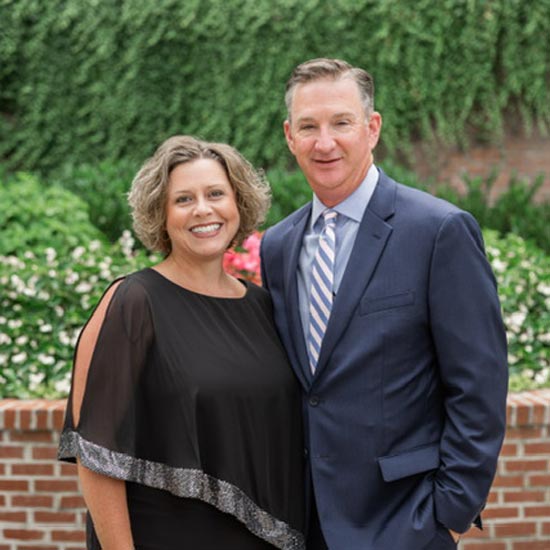

Greg Shupe’s banking career began with an unexpected conversation on a golf course. Thirty-one years later, the southern West Virginia native remains passionate about community banking, the relationships he has built and the value of learning every part of the business. As chairman of the West Virginia Bankers Association, he looks forward to supporting the organization’s education and advocacy efforts while continuing to learn from his fellow bankers.
We recently spoke with Greg about his career, his advice for emerging leaders and what keeps him busy outside the bank. The following are excerpts from our conversation.
How did you get your start in banking?
It’s kind of a funny story. I graduated from Concord University with a degree in finance and was having a hard time finding a job, like a lot of people in the early ‘90s. There weren’t many opportunities in southern West Virginia, especially around Beckley, where I lived and wanted to stay.
I was on the golf course playing with a guy I barely knew, and he mentioned that his bank was looking for a commercial loan collection manager. He asked whether I might be interested, and I said, “Absolutely!” Before I knew it, I had the start of a career.
I was willing to do whatever it took to learn more about the industry. I worked my way through several positions, which allowed me to explore more opportunities. I then made an employer change, which resulted in my moving to Mercer County, where I continued to expand my career for the next 10 years before returning to the Beckley area.
I’ve been with Pioneer Community Bank since 2014.
What is the best professional advice you have received?
Someone once told me, “Adversity does not build character; it reveals it.” I didn’t fully understand that until I experienced it. We’ve faced adversity during my time at the bank, and that advice has stayed with me. I keep that quote on the bulletin board in my office.
What advice would you give emerging leaders in banking?
Be patient. When you’re young in your career, you may want to run a bank within a couple of years, but that’s not always how it works. If you show a strong work ethic and stay the course, good opportunities will present themselves. You have to remain patient as you prepare for them.
Learn as much as you can. Pay attention to the leaders in your organization and learn from their habits. People will notice your effort over time.
What would you tell someone considering a career in banking?
Community banking is a passion of mine, and it’s where I’ve spent my entire career. One of the things I appreciate most is the opportunity to learn how the whole bank works. You learn about products and how those products affect the organization.
Whatever bank you choose, look for ways to learn all its different facets so you can become a well-rounded banker. If you understand the financials, you can better understand the impact you’re making on your company, your clients and your community.
That’s how you make a career of it: You learn as much as you can. That’s what I’ve tried to do, and I’m still learning.
What do you see as the greatest opportunities and challenges for banking over the next five to 10 years?
I think the biggest opportunity is also the biggest challenge: artificial intelligence.
Community banks are going to face challenges keeping up with AI as larger institutions incorporate it into their platforms. The opportunity is figuring out how we can use it in our day-to-day operations. Community banks may also have the flexibility to work with multiple vendors rather than relying on a single platform.
At the same time, we have to consider cybersecurity. What new risks might AI create? How could it affect cyberattacks? There are still questions we need to work through.
We’ve started exploring how to use AI internally at our bank, with an emphasis on keeping our information protected and controlling access. It will be interesting to see how that develops.
What has been the most rewarding part of your career?
Without a doubt, it’s the people I’ve met over the past 31 years — coworkers, clients, peers and vendors.
Some of those people have become dear friends. When I look back at the end of my banking career, I think that will be what matters most: the relationships built through the trials, tribulations and successes.
How did you become involved with the West Virginia Bankers Association?
My involvement began when I attended the West Virginia Bankers Association School of Banking in 2000 and 2001. Since then, I’ve attended many conferences and other association events, and I eventually became a member of the board.
The association has been part of my career for a long time, and my involvement has continued to grow.
Why is association membership important?
The association provides a lot of things that can sometimes be taken for granted.
The networking opportunities are excellent. You get to meet your peers, learn ways to advance your career and hear about what other banks are doing that might be useful in your own organization.
There are also many educational opportunities. Those programs can help someone who is just starting out and wants to learn more. They are also a valuable refresher for someone like me who has been in banking for a long time.
Advocacy at the state and national levels is extremely important, too. We need to stay aware of legislative and regulatory developments and understand what may be coming. It is important to know that without these advocacy efforts by the association, banks can lose their voice on the industry’s “needs and wants” when it comes to legislation.
Membership can be extremely rewarding, especially when you get involved.
As chairman, what are you looking forward to most?
I’m looking forward to continuing to meet people and learn about different aspects of the business. I try to learn something new every day.
I also look forward to supporting the association’s work, including legislative engagement and educational opportunities. I serve on the products and services groups, and one goal is to help enhance profitability for the association through that work.
Above all, I want to provide continued support to the association’s team.
What is happening at Pioneer Community Bank that you’re excited about?
We’re in the process of opening two new locations. We’re planning for one to open later this fall and hope to open the second in the first quarter of 2027.
That’s keeping me busy. There’s a lot going on, and it’s an interesting time for the bank.
Tell us about your life outside of work.
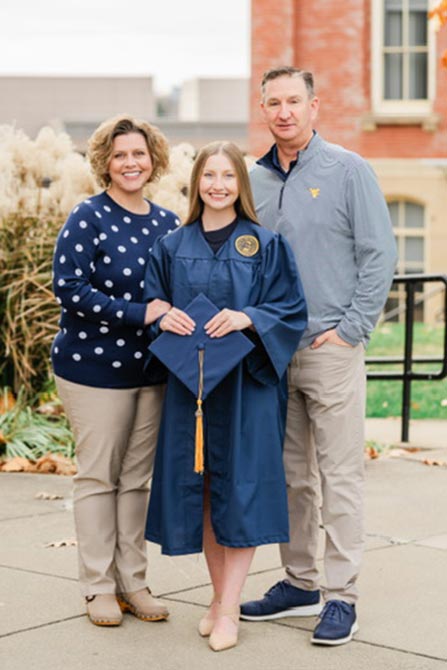
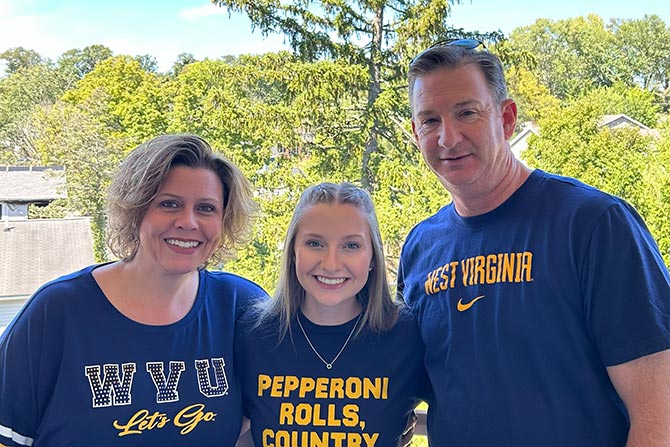
My wife, Kara, was a middle school math teacher for the bulk of her career and is now an elementary school principal in Beckley. Our daughter, Allison, graduated from West Virginia University and is now a registered nurse at J.W. Ruby Memorial Hospital in Morgantown. Allison is now continuing her education, working toward a master’s degree in nursing and a Family Nurse Practitioner certification.
We spend a lot of time in Morgantown visiting her and going to football games. When I’m home, you can usually find me playing golf. That’s my main hobby.
I also serve as a volunteer board member for the YMCA of Southern West Virginia, chairman of the board of the Beckley-Raleigh County Convention Center and a member of the executive committee of Region One Workforce West Virginia.
What might surprise your fellow bankers about you?
I’m a lawn snob! My lawn is my sanctuary. I spend a lot of time taking care of it, and it has to be perfect.